Search This Blog (A.K.A. "I Dote On...")

Thursday, July 31, 2008

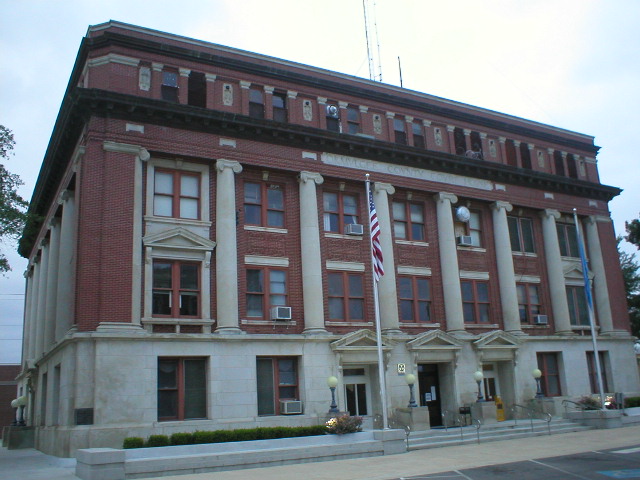
Okmulgee, OK


Okmulgee, Oklahoma was your typical small town in its state. An oil boom sent a wave of optimism running through the town in the 1970s, and the later oil bust brought it to its knees.

Unlike many small towns, Okmulgee didn't simply fold under the pressure of hard economic times.

It innovated.

Specifically, it became one of the many Oklahoma "Main Streets" via the National Trust for Historic Preservation.

Today, the city can boast of:

  1. 200 historic rehabilitations
  2. 109 new businesses
  3. 144 new jobs
  4. a decline in vacancy rate from 50 percent to 10
  5. and finally, an average commercial space rental rate that has more than doubled on average


Another case study of how preservation pays, Okmulgee can be explored further by clicking here.


The reason I present it to you is that there's a beautiful, concise quote--one that I'd like hearing from St. Louisans' mouths rather soon.


“Gone are the days when we would sit back and react to bad news. Now we go out and make good things happen.”
Linda S. Milligan, board chair, Okmulgee Main Street
If the declining dust bowl can do shape up, so can we!

Tuesday, July 29, 2008

Neighborhood Tours


No, that's not St. Louis, but its neighbor and rival to the north, Chicago.

Not surprisingly, Chicago, with 77 "Community Areas" that are further subdivided into neighborhoods, offers tours of its many enclaves.

Here is a quick description of the tours:

Mine the city’s hidden gems, its neighborhoods. From South Side neighborhood Beverly on the new Beautiful Beverly tour to historic parks on the new Garfield Park & Beyond tour, Neighborhood Tours showcase the arts, culture, history and people of Chicago. Approximately 4 hours long, Neighborhood Tours include light refreshments. Admission: Adults $30; Seniors 65+/Students with valid ID/Children 8–18 $25.


Why does St. Louis not offer tours of its neighborhoods?

There are many possibilities in a city St. Louis's size.

What would your perfect tour be?

Northside - Southside - Central Corridor?

African American - German - French - Italian - Bosnian - Vietnamese - Other Ethnicities?

Specific neighborhoods or groups of neighborhoods, such as Central West End, Lafayette Square, the Hill, the Ville, Old North St. Louis, Downtown, Tower Grove South and East, etc.?

Would you do a nightlife tour, and if so, where would you go?

How about an eatery tour?

Or a historic churches tour?

Would you do a walking tour, a car tour, a van, a bus, bike, helicopter, balloon, segway (I put that one last for a reason!)?

The possibilities are many.

I'm always taking people around the city, so it got me thinking. Why not set up a booth at America's Center and offer tours of the city? Cater them to visitors' interest (history/architecture, nightlife, dining, etc.) and get some sort of vehicle and go.

The Chicago Neighborhood Tours seem like they're very popular.

Again, I ask, what kind of tour of the city would you design?

Monday, July 28, 2008

Redemption vs. Green Space: Churches doubly strike at the built environment this month.

Click here for the latest Preservation Board agenda.

On it are not one, but two attempts by churches to demolish our history.

Why? Inevitably it's for green space. Or a "community center". Or, even if they don't indicate it to the Preservation Board, it's for parking.

One house is at 1244 Temple in the city's once opulent West End neighborhood (not to be confused with the more vague reference to anything west of the Central West End as the "West End").


Luckily, Bob Bettis of the Cultural Resources Office recommended denial of the permit for demolition.

It is just such a home--yes, it's vacant now--that, when demolished, can forever alter a block for the worse. Pretty soon, the creeping notion of an urban prairie descends upon the neighborhood aesthetic, and then you've got the recipe for several more demolition applications.

In the second case, this time in the Old North St. Louis neighborhood (and the Murphy-Blair Historic District), the Cultural Resources Office gave the thumbs up to a faith-based organization (highly respectable as it may be) to proceed with demolition of an 1880s-era Italianate building that was in bad shape.

If there's any neighborhood poised for revitalization, it's ONSL. If there's any neighborhood that needs to preserve absolutely every remaining building to truly revitalize, it's ONSL.

You simply can't convince me that this organization could not find a nearby LRA lot for super cheap on which it could have built its proposed new construction.

The building approved for demolition is located at 2605 Hadley. The one denied, now twice, is on the same block at 2619-21 Hadley.

When the Board reviews demolition, it should consider not only the condition of the building, the likelihood for redevelopment, historical significance, and historic context. It should also consider the viability of proceeding with the proposed development on a different site.

It doesn't make sense to have historic context as criteria for demolition approval/denial when the Board, in piecemeal fashion, allows enough scattered site demolitions across the city to guarantee future approved demolitions on the basis of diminished context!

And churches! I am getting so tired of their "green space" pleas. This city has a wonderful park system, and nearby vacant lots can be handily turned to such green space if need be.

I think that the Board of Alderman should pass a "green space ordinance" that forces any entity that wants to develop green space as part of a development conduct a study for the need for such green space, that they demonstrate beyond a reasonable doubt that this green space will provide more economic, social, and cultural development than would the existing structure(s), AND that they develop a long-term plan for maintenance and landscaping of the site, including signage, fences, and other equipment.

The same stringent review process should be put into place for proposed parking lots as well.

It seems the Board just isn't looking at the big picture ever. All of these individual permit reviews have caused near-sightedness.

Churches--which already receive tax benefits--should have to have a development plan approved by citizens of the Ward when they acquire a certain number of parcels. Their wanton demolitions seem, well, selfish and quite against the future of their home neighborhoods.

Back from St. Louis

What a greet weekend and another nice trip back to St. Louis.

I made it over to the Stable on Cherokee for some pizza, but that was my only experience at a brand new place. I did hit up perennial favorites Sameem's on South Grand and Blues City Deli in Benton Park. All were excellent. The Stable's space is particularly impressive.

One of my favorite parts was giving one of my mother's friends a tour of the whole city (but mostly north--she's from and still lives in South City). She doesn't leave her neighborhood too often and told my mom she'd like to go driving around and see the city when I got back in to town.

It was a great experience for all involved.

One moment of humor came when Mom tried to pretend that she knew the St. Louis history I was spouting off.

As we passed the Blairmont-owned former Schnucks site near Cass just north of downtown, I began to explain what the Kerry Patch was before I was interrupted by Mom.

Mom: Oh, I know what that is!

Friend: What is it, then?

Mom: It's when...a patch of people...came down to St. Louis...from Kerry, Indiana!

She said it so proudly, as if she'd really gotten it correct. Kerry, Indiana! Hah...there's a Gary, but is there a Kerry?

More on my trip back later. As always, forgive me for the hiatus from posting when I make my returns home.

Tuesday, July 22, 2008

A plan to commemorate St. Louis's original street grid, including its French names.

I was surprised to run across this West End Word article.

Afftonian and Francophile Thomas Mack wants to see signs put up downtown that reflect the city's founding French heritage.


While this quote is curious:

But [downtown Alderman Phyllis] Young raised a concern about the precedent Mack’s proposal might set. “The Hill might want to implement Italian names, and the Bosnian community might want to do honorary naming of streets in the Bevo area,” she wrote in her letter to Mack.


She totally misses the point that this is not about celebrating an ethnicity, but our founding heritage.


I say go for it! It's a smell step, but a smart one in recognizing that we have a history to be proud of.


One suggestion: a pole in a sleeker, black color looks more appealing than that construction-fence-gray.

Monday, July 21, 2008

Ballpark Village: don't build an artificial office park!

Wait a second.

I'm not anti-office space.

With a recent article from the P-D expressing that two major law firms are looking at a new home in Clayton (OR a fresh bundle of tax incentives from the city to remain downtown!), we need workers downtown.

But why do we have to stress the "development" of sites? Isn't this a very suburban notion--to take a chunk of land, neatly plan it so as to screen out all unwanteds and funnel in all desires, to control for the expected and the unexpected?

Ballpark Village--and I believe Steve Patterson has expressed the same view over at Urban Review--should be subdivided and rezoned. The city should put through-streets in the site. The lots can then be sold off.

This is the best of both worlds--"development" mentality and urbanism. With an aggressive zoning overlay district, the city could indeed get a Ballpark Village-like development, meaning that a certain percentage of these private lots would have to be dedicated to offices, would have to be so many or so few stories in height, would have to have the same setback and signage requirements, etc.

BUT, the site's land would be competed over, producing a more diverse and potentially much better and much more organic "development".

Jane Jacobs called downtown megaprojects "cataclysmic development"--meaning that if too much money goes into one place at one time, the flood of money drowns the place. It drowns its authenticity and its connection to the dozens of surrounding blocks that were developed without such incentives and excitement and "District-ification". It becomes an island of investment, a fad to be discarded once the novelty has washed away with the money.

If the land that BPV rests upon is truly valuable, private developers will snatch up the lots. Due to the market, they may just erect the office towers that are currently being discussed. But some enterprising developer may also find it useful to develop rental apartments that overlook the stadium. The Ballpark Lofts have certainly done well, according to the Post.

So why restrict development and turn a couple city blocks into an artifical "Village" when we could have good ol' urbanism do the work?

Sunday, July 20, 2008

Recontexualizing residential in Midtown/Grand Center...

Often, on this blog, I speak of grave threats to St. Louis's diminished (and diminishing) urban context.

There are too few examples of sound, aesthetically pleasing infill reclaiming sections of lost urban landscape. The North Side has plenty of plots of land on which to evoke the old, dense urbanism of the past, but these opportunities have mostly been undercut with cheap construction, not enough trees, and no retail/commercial anywhere near the neighborhood. A lot of those things are understandable in such a disinvested area.

But what about a city's self-conscious Arts District?

In St. Louis, that's Grand Center/Midtown. And that district's two anchors, Grand Center Inc. and St. Louis University, have been all too happy to steward Midtown's residential (and mixed use and industrial) context off the planet.

Rather than see the scattered residential buildings as assets to redevelop the neighborhood, both entities ignored them entirely, watching them decay into convenient parking lot opportunities.

Exhibit A - The Central Apartments


Exhibit B - 3740 Lindell

Exhibit C - Wagner House


And that's only from the past year or so!

It's incredible that there was little outcry over SLU's haphazard demo's. Midtown's residential context--one that once housed upstart St. Louisans in very dense but luxurious quarters, eventually alongside the lower classes--is nearly gone.

Luckily, a new context is arising in the ArtHouse development.

Eco-friendly, attractive, contemporary, urban, dense--these are great features to add to Midtown. This development, though not affordable to anyone but an upper middle class, is definitely a start at turning Midtown around. It could once again be a residential neighborhood if this wise developer's plans catch on.


Of course, I'd like to see some diversity in the neighborhood, both of types of buildings and people, but ArtHouse is a great rallying cry for bolder design and urban intimacy, even perched on their little hill as the units are.

I look forward to one force in Midtown/Grand Center trying to restore and recontextualize rather than destroy and leave lifeless strictly utilitarian surface lots.

Fashion STL Style!

Fashion STL Style!
St. Louis Gives You the Shirt Off of Its Own Back!

Next American City

Next American City
Your Go-To Source for Urban Affairs

Join the StreetsBlog Network!

Join the StreetsBlog Network!
Your Source for Livable Streets

Trust in Rust!

Trust in Rust!
News from the Rustbelt

Dotage St. Louis -- Blogging the St. Louis Built Environment Since 2008

Topics: Historic Preservation, Politics and Government, Development, Architecture, Urban Planning, Urban Design, Local Business, Crime and Safety, Neighborhoods, and Anything Else Relating to Making St. Louis a Better City!